That is the short version. Now let’s walk through each step in the order that actually works.
Step 1: Set Your Budget for your Spanish Destination Wedding
Before you fall in love with a clifftop finca in Mallorca, decide what you are comfortable spending. Your budget shapes every decision that follows: the region, the venue, the guest count, even the time of year.
As a rough starting point, allocate your budget across these main blocks: venue and catering (usually the largest share, often over 50 percent), photography and video, flowers and decor, music and entertainment, attire, and guest logistics. Build in a buffer of around 10 percent for the extras that always appear, like transfers, welcome dinners or last minute additions.
One advantage of marrying in Spain: your money often goes further than in the UK, Ireland or the US, especially outside the peak summer months and the most famous destinations.
Step 2: Choose Your Season and Date
Here’s the thing about Spain: the weather is one of the main reasons you’re getting married here, so it’s worth choosing your date with a little care. If you dream of golden light and dinner under the open sky, late spring and early autumn are your sweet spot, with near-guaranteed sunshine and temperatures that let everyone actually enjoy themselves. July and August? Beautiful, but be honest with yourself about how your guests will handle 40 degrees in Seville. And don’t rule out winter: it can be wonderful for photos and an outdoor welcome drink, as long as you have a cozy indoor backup plan.
If you are still weighing your options, read my full guide on the best season to get married in Spain, which breaks down weather, prices and availability month by month.
Once you have a season in mind, pick two or three candidate dates rather than one fixed date. Flexibility gives you far more negotiating power with venues.
Step 3: Draft Your Guest List
You do not need final numbers yet, but you do need a realistic range. Venues in Spain quote and plan around guest count, and a wedding for 40 looks very different from a wedding for 140. Keep in mind that some «fincas» (venues) even work with a minimum number of guests, so if you are planning an intimate celebration, ask about this before you fall in love with a venue that only hosts weddings of 150 or more.
Keep in mind that destination weddings naturally trim the list. Expect somewhere between 60 and 70 percent of invited guests to attend, depending on how far they need to travel. Many couples see this as a feature, not a bug: the people who come are the people who really matter.
Step 4: Find and Book Your Venue in Spain
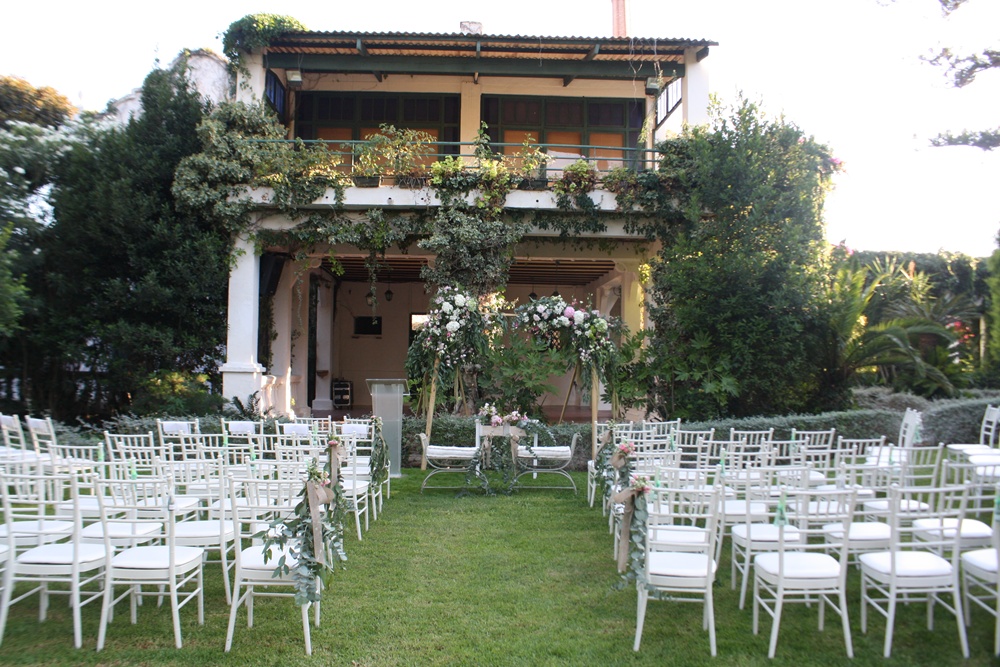
This is the decision that anchors everything else. Spain offers an enormous range: historic haciendas in Andalusia, vineyards in Catalonia, beach clubs on the Costa del Sol, rustic fincas in Mallorca, and castles and palaces almost everywhere.
When shortlisting venues, look beyond the photos:
- Capacity and layout: Can it host your ceremony, cocktail hour and dinner comfortably, with a plan B for weather?
- Catering rules: Some venues have in-house catering, others require or allow external caterers. This significantly affects cost and menu flexibility.
- Music and closing time: Noise restrictions vary by municipality. Ask when the party has to end.
- Accommodation: On-site rooms for the couple or guests are a major plus for destination weddings.
- Exclusivity: Confirm whether yours will be the only wedding that day.
Popular venues in high season book 12 to 18 months ahead, so this step deserves urgency.
Step 5: Hire a Local Wedding Planner if You Feel Too Overwhelmed
Here is an honest truth about planning a Spanish wedding from abroad: it is entirely possible to do it yourself, but there is a point where the language barrier, the time difference and the sheer number of moving parts start to weigh on you. If you reach that point, a local planner is the single best investment you can make.
This is exactly what I do at Say I Do in Spain. I work with couples planning from abroad and can step in as early as you need, including the venue search itself: instead of scrolling through hundreds of websites in Spanish, you tell me your style, budget and guest count, and I shortlist the fincas and venues that truly fit. From there, I handle supplier communication, negotiate contracts, coordinate logistics and manage the wedding day itself so you can actually enjoy it. Whether you want full planning from day one or just help with specific parts, I adapt to how much support you need.
Step 6: Send Your Save the Dates
For a destination wedding, save the dates should go out earlier than for a hometown wedding. I’d do it as soon as the venue is locked in, ideally 9 to 12 months in advance. Your guests need time to request holidays, compare flights and budget for the trip.
Include the location and dates, and if possible a wedding website with travel tips, airport options and accommodation suggestions (although this can also be part of the formal invitation that you’ll send later on). The easier you make the logistics, the higher your attendance rate.
Step 7: Source Your Local Suppliers
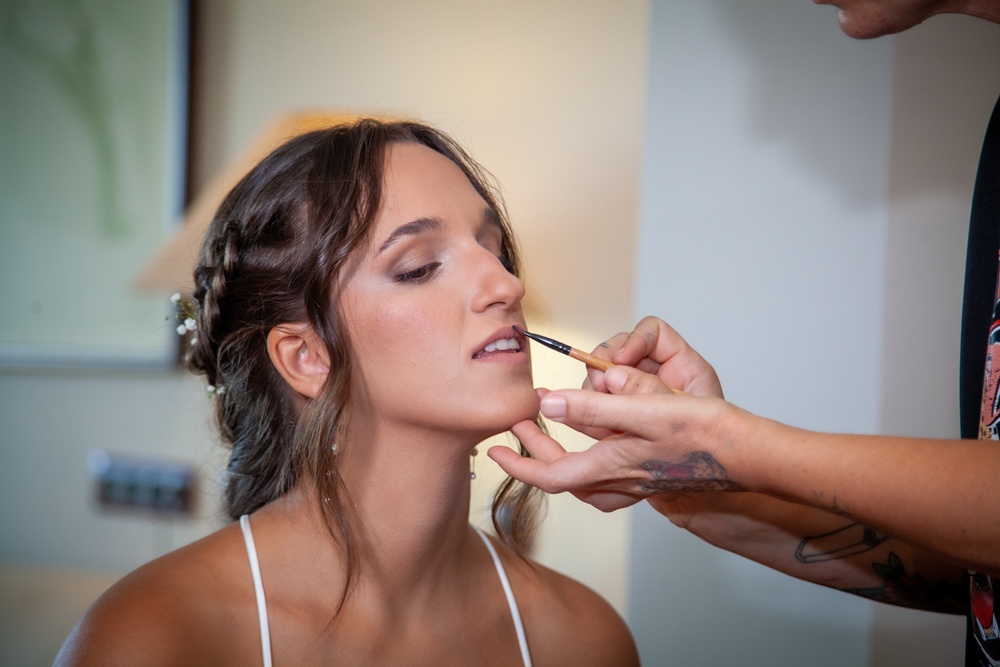
With venue and date secured, it is time to build your team: photographer, videographer, florist, caterer (if not in-house), hair and makeup, musicians or DJ, officiant, and any extras like photo booths or fireworks.
The largest supplier directory in Spain is bodas.net, where you can find reviews, portfolios and pricing for thousands of professionals. There is one catch: the platform and most of the suppliers on it operate almost entirely in Spanish. This is one of the most practical reasons couples hire a local planner, who already knows which suppliers are reliable, communicates with them in their language and can often access better rates than a couple contacting them cold.
Book photographers and popular musicians early. The best ones are reserved almost as far ahead as venues.
Step 8: Say Yes to the Dress (Probably at Home)
Spain has wonderful bridal designers, but for most couples planning from abroad, buying the dress at home is the smarter move. Fittings typically require three or more visits over several months, which is difficult to coordinate with a boutique in another country.
Buy at home, complete your fittings there, and carry the dress with you as hand luggage on the flight. Most airlines will accommodate a garment bag if you ask in advance. The same logic applies to suits: fit them at home, transport them carefully.
Step 9: Send the Formal Invitations
Formal invitations for a destination wedding should go out around 4 to 6 months before the date, with an RSVP deadline about 2 to 3 months out. You need final numbers earlier than a local wedding would require, because caterers, transport companies and accommodation blocks all depend on an accurate headcount.
Digital RSVPs through a wedding website make chasing responses much easier when your guests are spread across countries.
Step 10: Arrange Accommodation and Transfers for Your Guests
This step separates a good destination wedding from a stressful one. Your guests are traveling far for you, so make arrival easy:
- Room blocks: Negotiate group rates at two or three hotels at different price points near the venue.
- Transfers: Organize coaches or minibuses between the hotels and the venue on the wedding day. Spanish celebrations run late, and guests should not be hunting for taxis at 3 am in the countryside.
- Travel info: Share the nearest airports, typical transfer times and any local tips on your wedding website.
Again, this is something that a local wedding planner can help you coordinate and take that weight off your shoulders.
If part of your group stays extra days, a welcome dinner or a relaxed day-after gathering turns the wedding into a mini holiday your guests will talk about for years.
Step 11: Build Your Timeline and Day Program
In the final two to three months, everything comes together into a detailed day program: hair and makeup start times, ceremony, cocktail hour, dinner, first dance, party.
One important cultural note: Spanish weddings run later than most international couples expect. Dinner often starts around 9 or 10 pm and the party can easily continue until 4 or 5 am. You can adapt the schedule to your guests’ habits, but leaning into the Spanish rhythm, with a long golden-hour cocktail and a late, lively party, is part of the magic.
Share the final timeline with every supplier at least two weeks before the wedding, and appoint one point of contact for the day (your planner, if you have one) so nobody calls the bride about napkin colors.
What Should You Keep in Mind When Planning a Destination Wedding in Spain?
A few Spain-specific realities worth knowing before you start:
Legal ceremonies are complicated for non-residents. Civil marriages in Spain generally require residency, so most international couples complete the legal paperwork in their home country and hold a symbolic ceremony in Spain. Nobody at your wedding will know the difference, and it removes months of bureaucracy.
August is not always your friend. Beyond the heat, August is Spain’s holiday month. Some suppliers close, cities empty out, and coastal areas are at their most crowded and expensive.
The language barrier is real. English-speaking suppliers exist, especially in international hubs like Marbella, Barcelona and Mallorca, but the majority of the market works in Spanish. Budget for this in either patience or planner fees.
Payment customs differ. Many Spanish suppliers work with staged bank transfers rather than card payments, and contracts may be in Spanish. Always ask for a written contract and read it (or have it translated) before paying a deposit.
Sunday and weekday weddings are normal here. If your preferred venue is booked on Saturdays, a Friday or Sunday wedding is common in Spain and often comes with better pricing.
Frequently Asked Questions
How far in advance should you plan a destination wedding in Spain?
Most couples plan in 12 to 18 months. This gives you access to the best venues and suppliers, and gives your guests enough time to arrange travel. Shorter timelines are possible, especially outside peak season, but expect less availability.
How much does a destination wedding in Spain cost?
It varies enormously by region, guest count and style, but many international couples find that a wedding in Spain costs noticeably less than an equivalent celebration at home, particularly outside July and August. Venue and catering typically make up over 50 percent of the total.
Do you need a wedding planner for a destination wedding in Spain?
No, but it helps significantly. Most suppliers and directories operate in Spanish, and coordinating from abroad takes real time. A local planner bridges the language gap, knows reliable suppliers and manages the day itself. Check out my guide on planning a destination wedding in Spain without a planner to find out if hiring one is the right decision for you.