If you’ve never been to a Spanish wedding before, you’re probably wondering what to expect. Are they very different from weddings in the US, the UK or elsewhere in the world? The answer is yes… and that’s one of the reasons so many international couples choose to get married here!
Spanish weddings are known for being long, relaxed and incredibly social. Guests don’t just come for the ceremony. They come to spend the whole day (and most of the night!) celebrating together, with amazing food, plenty of drinks and a party that often doesn’t finish until five or six in the morning.
As a wedding planner based in Spain, these are the traditions I see at almost every wedding I organize. Some have been around for generations, while others have become popular more recently. And, of course, there are also a few that are slowly disappearing.
If you’re planning your own destination wedding in Spain, you certainly don’t need to include every single tradition. In fact, I’d encourage you to choose the ones that genuinely fit your personalities and the kind of experience you want to create for your guests.
Here’s what you can expect at a typical Spanish wedding, together with my thoughts on which traditions I think are really worth it.
The Cocktail Hour: One of the Highlights of a Spanish Wedding
One thing that often surprises my international couples is how important the cocktail hour is in Spain. In many countries it’s simply a short break while the couple takes photos before dinner. Here, it’s much more than that. It usually lasts around two hours and, in my opinion, it’s one of the best parts of the entire wedding.
It’s the moment when everyone finally relaxes. Guests have a drink in hand, the atmosphere becomes much more informal and people start chatting, meeting each other and enjoying the food. If you ask Spanish guests what their favourite part of the day was, many of them will actually say the cocktail hour.
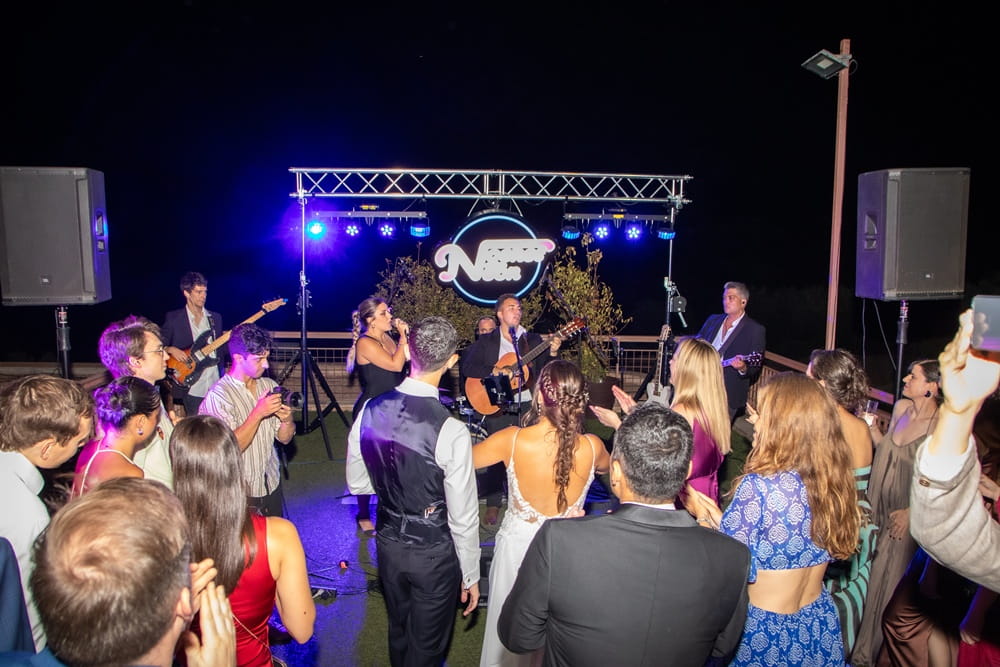
Live Music
Almost every wedding I plan has live music during the cocktail, whether it’s a Spanish guitar duo or an acoustic band. And it’s easy to see why. It creates a relaxed, welcoming atmosphere while guests enjoy a drink, mingle and explore the different food stations.
That said, if you’re planning a cocktail style reception instead of a seated banquet, I actually prefer saving the band for later in the evening. Once guests have already had something to eat and a few drinks, live music naturally brings everyone together and creates a fun, lively atmosphere before the dancing even begins. It feels like a natural transition from dinner to the party, and I’ve found that it encourages people to start letting loose much earlier.
It doesn’t have to be a large band either. Even a small group can have a huge impact on the overall atmosphere of your wedding.
A Cortador de Jamón
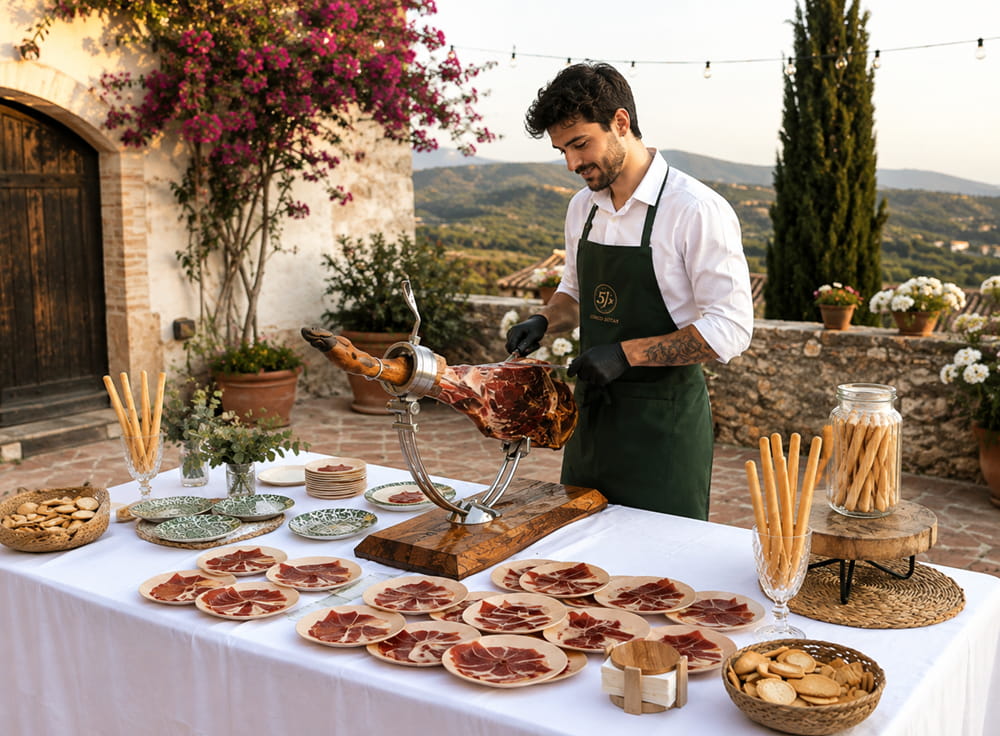
If there’s one Spanish tradition that international guests absolutely love, it’s the cortador de jamón. A professional ham carver spends the cocktail hour slicing Iberian ham by hand, serving each portion fresh. It’s not just about the food. Guests enjoy watching the carving process, asking questions and trying something that’s completely new for many of them.
If you’re looking for one detail that immediately gives your wedding an authentic Spanish feel, this would probably be my first recommendation.
Interactive Food Stations
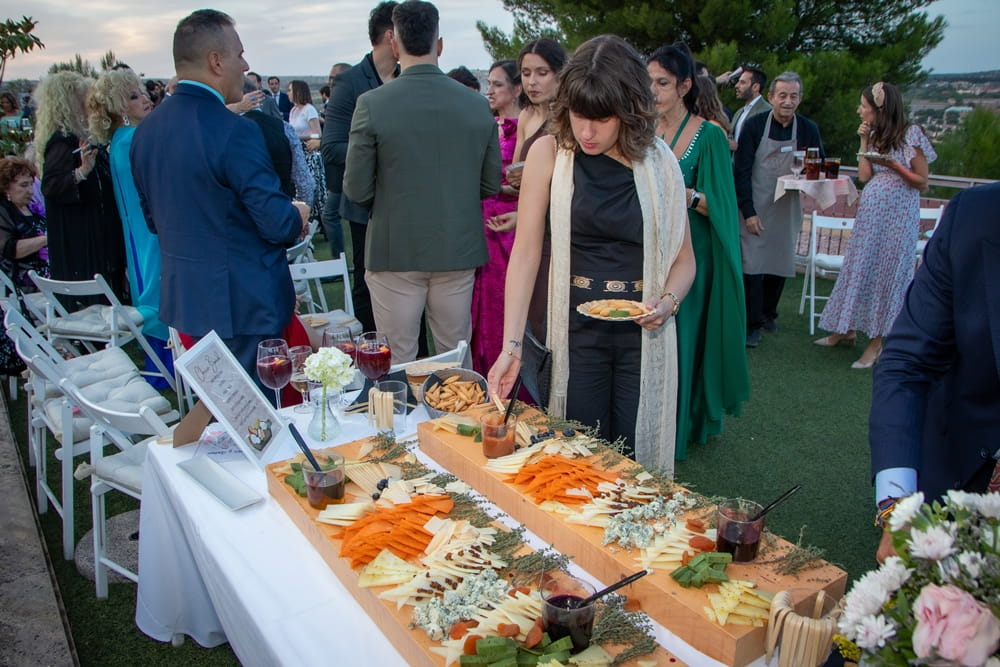
Spanish cocktail hours are also known for their food stations. Alongside the traditional canapés served by waiters, many venues offer live cooking stations where food is prepared in front of your guests.
Some of the most popular options include:
- Paella cooked fresh on site
- A seafood or oyster station
- A selection of Spanish cheeses
- A vermouth, gin & tonic or sangria bar
These little experiences make the cocktail hour feel much more interactive and give guests plenty to talk about while they mingle.
One piece of advice I often give my couples is not to underestimate this part of the day. It’s where guests spend the most time socialising, and it’s usually one of the memories they take home with them.
Banquet or Cocktail-Style Reception?
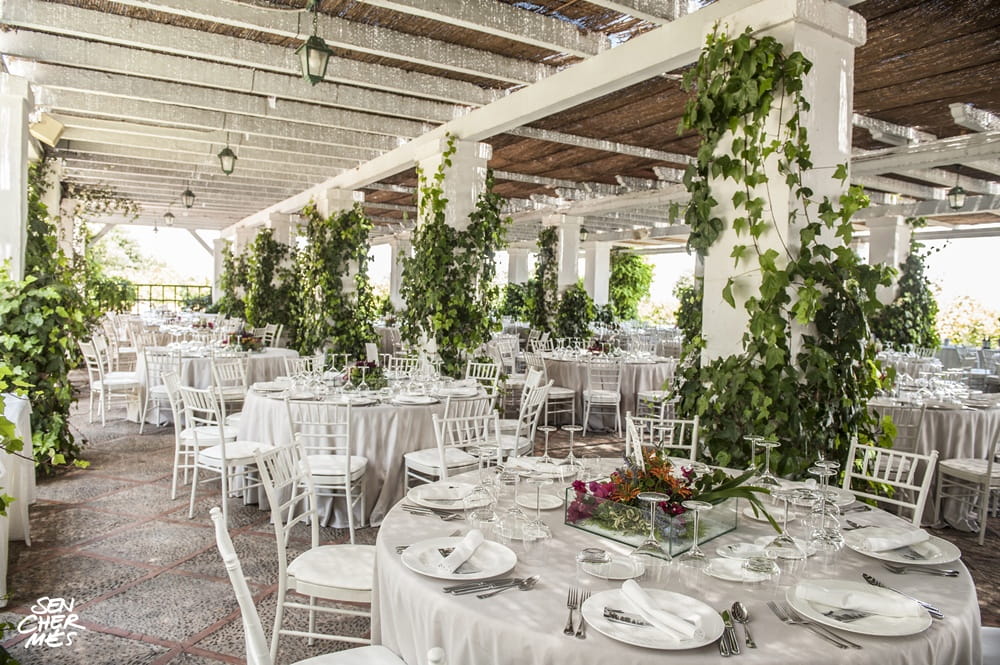
One thing that surprises many of my international couples is that most Spanish weddings still include a traditional seated banquet. Guests are assigned a table, dinner is served over several courses, and everyone stays seated for most of the evening before the party begins. It’s a format that works very well and is still by far the most common option in Spain.
That said, it’s not your only choice. In recent years, I’ve planned more and more cocktail style receptions, especially for couples who want a more relaxed, informal atmosphere. Instead of sitting at the same table for several hours, guests can move around freely, chat with different people throughout the evening and enjoy a variety of food stations and passed appetizers. Personally, this is my favorite option whenever the venue allows it (which is, unfortunately, not always the case).
One of the biggest advantages is that you actually get to spend time with your guests. At a traditional banquet, couples often find themselves rushing from table to table between courses, trying to say hello to everyone. With a cocktail style reception, those conversations happen naturally throughout the evening, without feeling rushed.
I also find that guests mix much more. Friends meet family members, different groups naturally come together, and the whole wedding feels more relaxed and social.
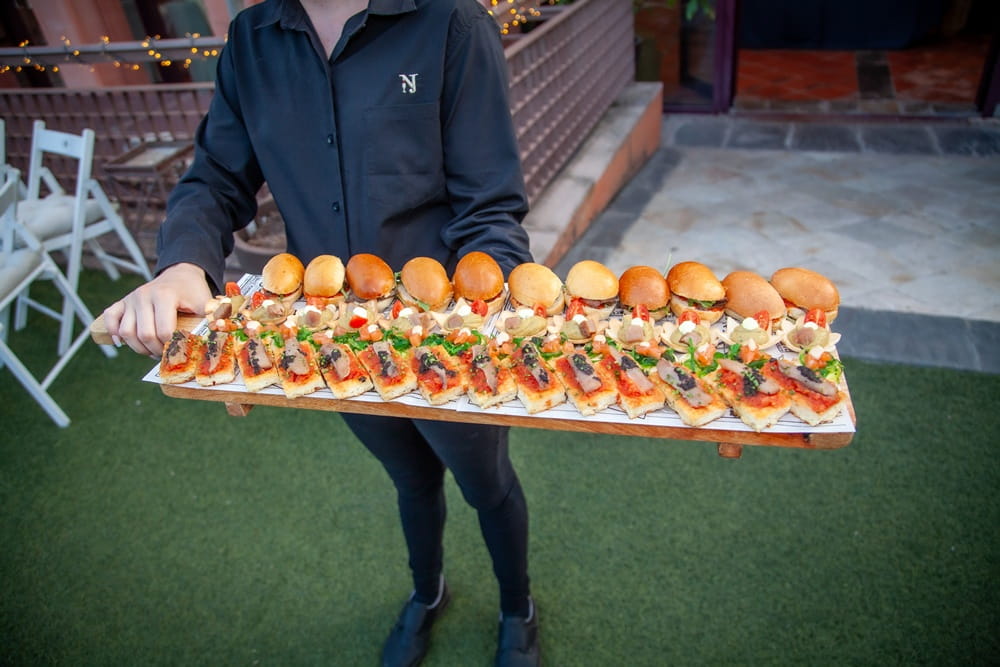
Of course, there are a few things to keep in mind. Older guests usually appreciate having somewhere comfortable to sit, so I always recommend providing plenty of seating even if you’re not planning a formal dinner. A cocktail reception doesn’t mean everyone has to stand all evening.
The other thing to check is your venue. While cocktail style receptions are becoming more popular, some venues still require couples to have a seated banquet, so it’s worth asking about this before booking your venue if you already know that’s the style of wedding you’d like. If your venue only offers a seated dinner, don’t worry. There are still plenty of ways to make the evening feel more relaxed. I often recommend extending the cocktail hour and keeping dinner a little shorter, so guests spend more time socializing and less time sitting at the table.
Gift Giving Traditions at Spanish Weddings
Spanish weddings are full of little traditions. The nice thing is that none of these are compulsory. Some couples include all of them, others skip them entirely, and many put their own spin on them. That’s one of the reasons I enjoy planning destination weddings so much. You can embrace as much (or as little) of Spanish tradition as feels right for you.
Giving Flowers to the Mothers
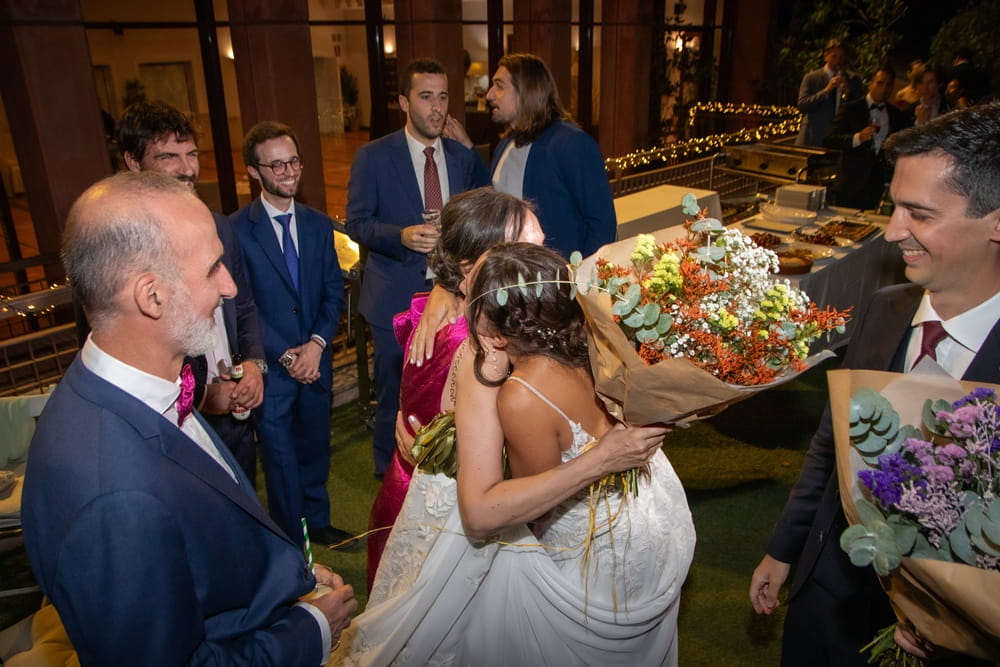
One tradition you’ll often see during the reception is the couple presenting a bouquet of flowers to their mothers. Sometimes couples also include grandmothers or another important family member, but it’s usually the mothers who are honored. It’s a simple gesture, but it’s often one of the most emotional moments of the day. If you’re close to your parents, I think it’s a lovely tradition to include, even if you’re not following many other Spanish customs.
A Gift for the Next Couple(s) to Get Married
Another tradition you’ll often see at Spanish weddings is the couple surprising friends or family members who are engaged with a small gift during the reception. It could be something symbolic, a bottle of champagne, a personalized keepsake, or another thoughtful present. It’s a lovely way of wishing them happiness as they start planning their own wedding.
Personally, I think this is one of those traditions you can easily skip if you’re trying to keep your budget under control. While it’s a lovely gesture, I don’t think guests would feel like anything was missing if you decided not to include it. That said, if your budget allows, it can be a really sweet surprise for the couple receiving it and a memorable moment for everyone watching.
Wedding Favors for Your Guests
It’s also very common for Spanish couples to give every guest a small gift to take home. These wedding favors, known as detalles, can be almost anything: candles, olive oil, fans, local products or personalized keepsakes. My advice here is simple: if you’re going to give your guests a favor, choose something they’ll actually use or want to keep.
One of my favorite ideas is a personalized illustration of each guest. It’s such a unique keepsake, and unlike many wedding favors that end up tucked away in a drawer, this is something guests can actually frame and display at home. Every time I’ve seen these at a wedding, guests absolutely love them. I usually recommend Dibujos Ilustraciones Bodas, whose work is lovely.
Spanish Traditions on the Way Out
Like weddings everywhere, Spanish weddings have evolved over the years. While many traditions are still going strong, there are a few that have become much less common than they used to be.
The Bouquet Toss
The bouquet toss is something many international couples ask me about, but it’s actually becoming quite rare at Spanish weddings. As I mentioned earlier, many couples now prefer to surprise a friend or family member who’s engaged with a small gift instead. It feels more personal and avoids asking all the single women to gather on the dance floor, which many couples feel is a little outdated.
Of course, if the bouquet toss is a tradition you love, there’s absolutely no reason not to include it. Destination weddings are all about creating a celebration that reflects your personalities, not following every local custom.
Cutting the Wedding Cake
Another tradition that’s slowly disappearing is the formal cake cutting. Traditional tiered wedding cakes have given way to lighter desserts, and tarta árabe, a layered pastry dessert with cream, is a favorite at Spanish weddings. Plenty of couples skip the formal cake cutting entirely and go straight from dinner to the first dance.
Personally, I think this is a tradition you can easily leave out if it doesn’t mean much to you. Most guests won’t even notice it’s missing, and it helps keep the evening flowing naturally without stopping for another scheduled moment.
What Happens Once the Party Starts?
If there’s one thing Spanish weddings are famous for, it’s the party. Unlike in many other countries, where celebrations finish around midnight, weddings in Spain often continue until five or six in the morning. The dancing starts late, but once it does, the party usually doesn’t slow down.
The First Dance
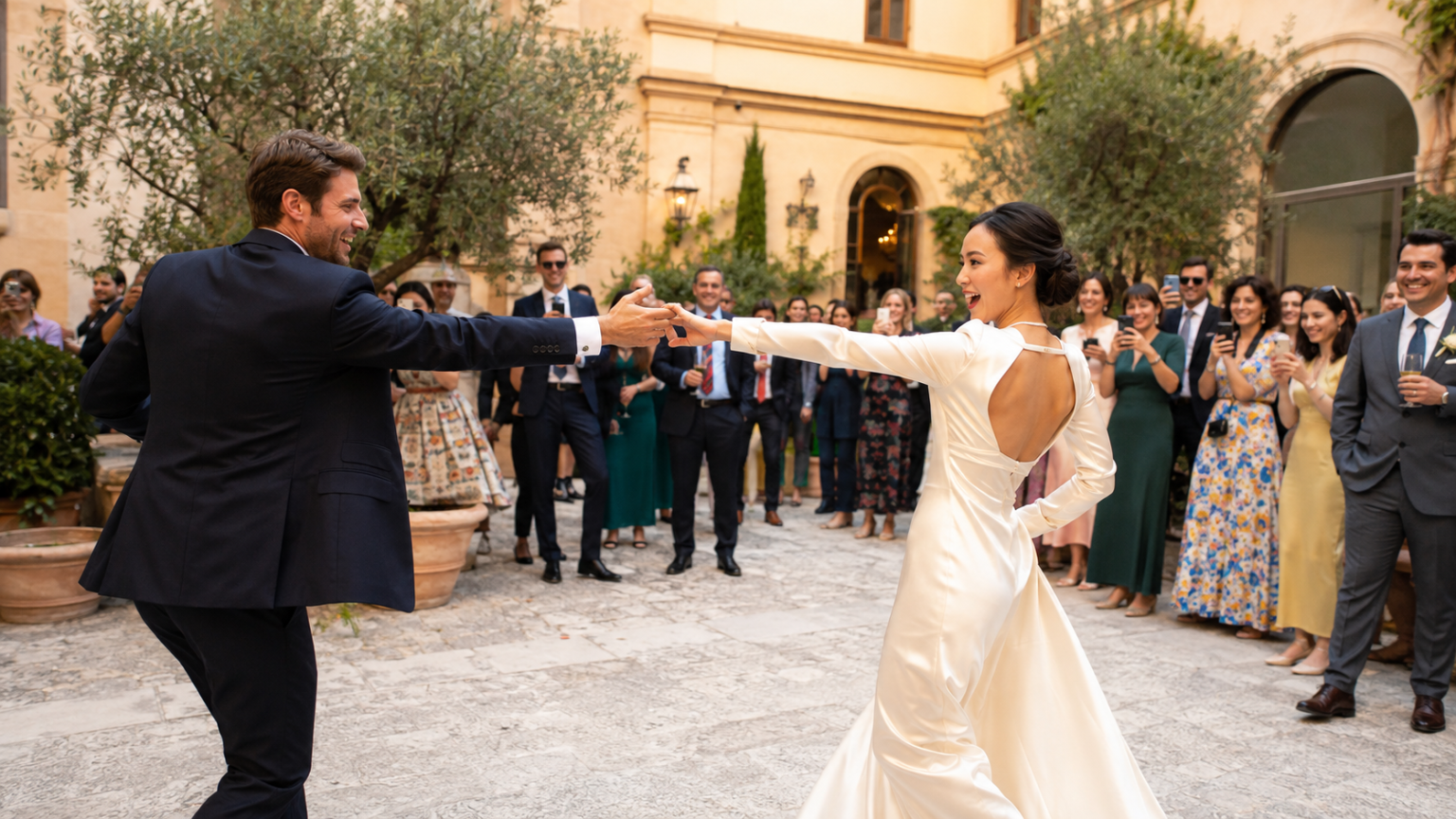
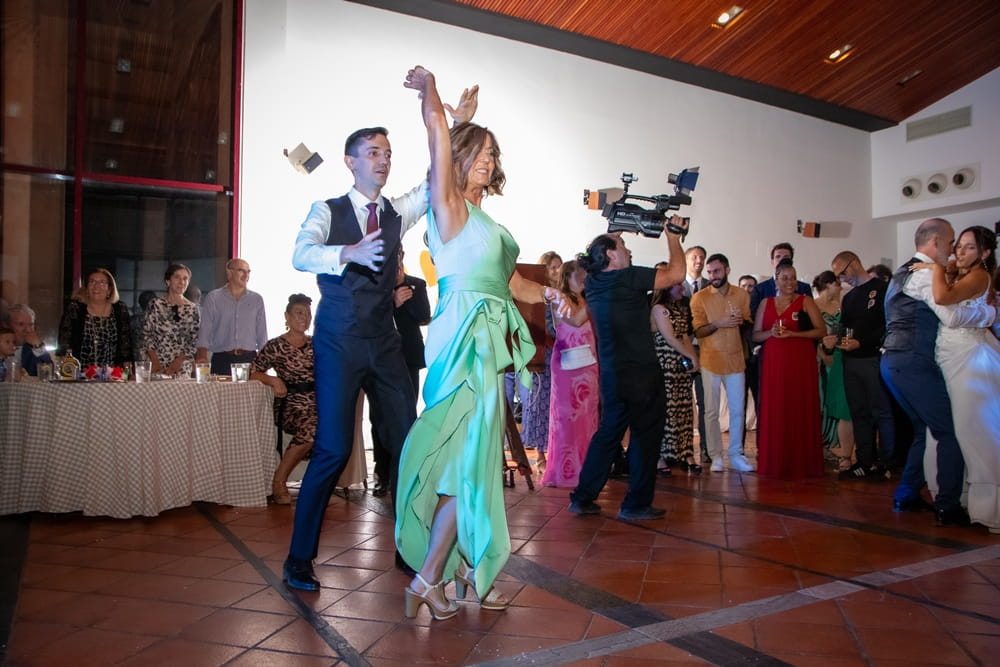
The first dance is still a tradition at most Spanish weddings and marks the official start of the party. Traditionally, the newlyweds share the first dance together. Once their song finishes, it’s also common for the groom to dance with his mother and the bride with her father before inviting the rest of the guests onto the dance floor.
Not every couple follows this tradition today, but it’s still something you’ll see at many weddings across Spain. Whether you choose to keep it or not, once these dances are over, the dance floor officially opens and the party really begins.
The Open Bar
Another thing international couples are often surprised by is the barra libre, or open bar. At most wedding venues in Spain, an open bar isn’t really an optional extra. It’s simply how weddings are typically organized, and most venues include it as part of their wedding packages.
The open bar usually starts after dinner and continues until the end of the celebration, rather than lasting for just a couple of hours. If you’re planning your destination wedding budget in Spain, it’s worth keeping this in mind, as it’s generally expected to run for the entire party.
A Photo Booth
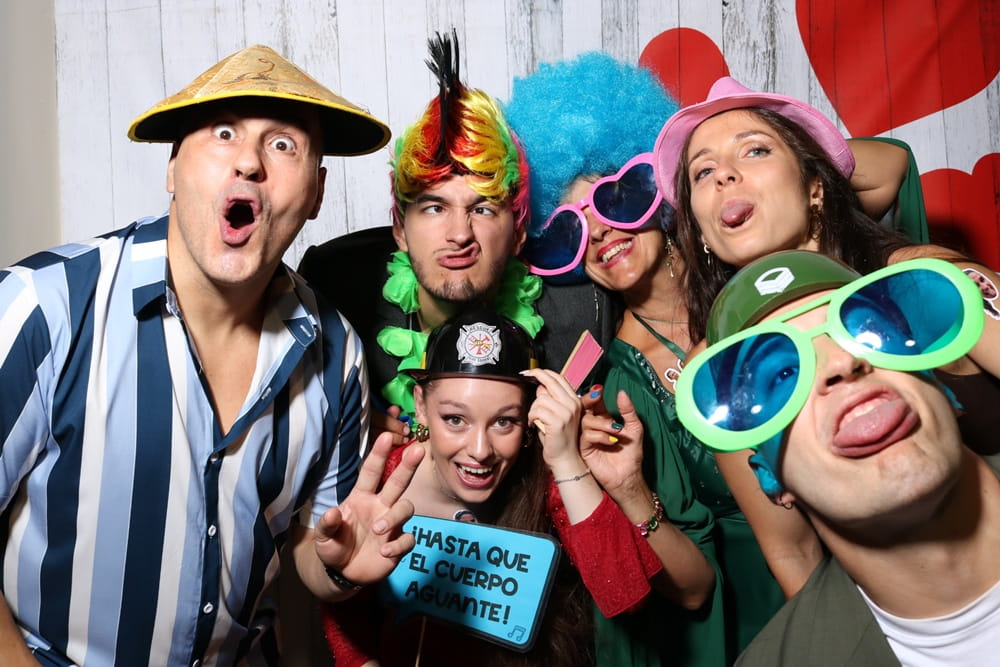
Photo booths have become incredibly popular over the last few years, and it’s easy to see why. Guests love taking silly photos together throughout the night, and you’ll end up with hundreds of candid memories that your photographer probably wouldn’t have captured. It’s always a big hit! Many companies also provide a guest book where people can stick their photos and leave you a message, which makes for a lovely keepsake after the wedding.
La Hora Loca
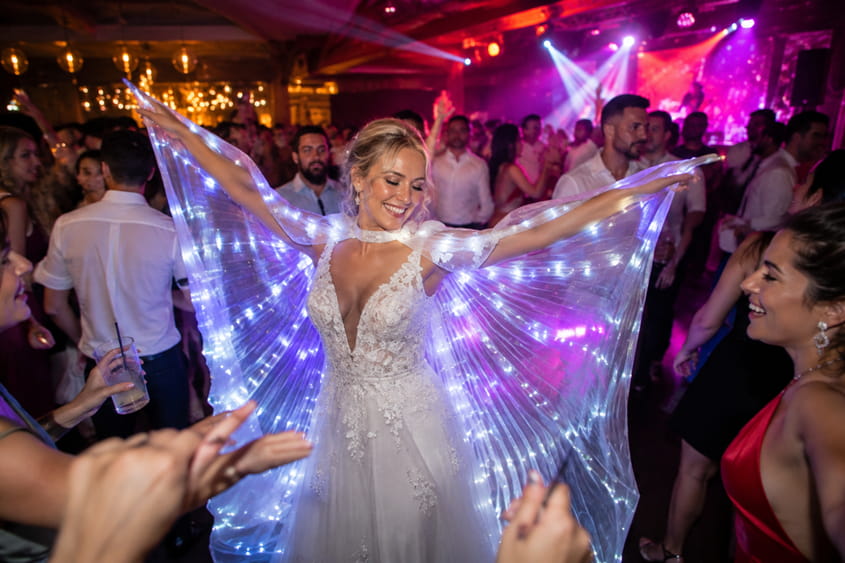
Around an hour after the dancing begins, many Spanish weddings have what’s known as la hora loca. This is when the party gets turned up a notch. LED foam sticks, oversized sunglasses, bubble guns, glow necklaces, a light-up cape for the bride… anything goes. Some couples even hire specialist companies who arrive with dancers, drummers and a full kit. It reliably gets every last guest onto the dance floor but, of course, if you’re trying to prioritize your budget, I don’t think hiring a specialist company is essential. Simply handing out a few fun props can create a very similar atmosphere.
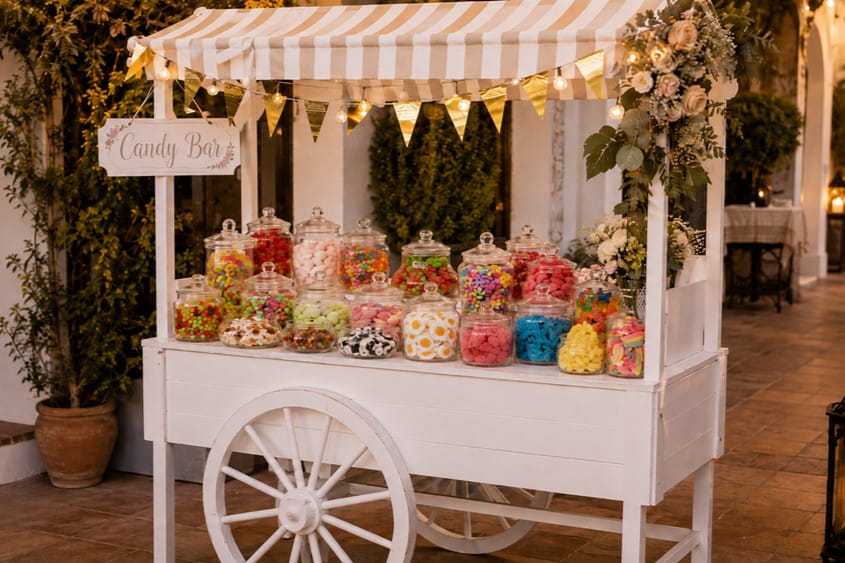
The Candy Bar
Another detail that’s become very popular is setting up a candy bar later in the evening. After hours of dancing, guests can help themselves to sweets whenever they fancy a little sugar boost. It’s a simple addition, but one that both children and adults always seem to enjoy.
Baskets of Espadrilles
If you’ve ever worn heels to a wedding, you’ll understand why this has become so popular. Many couples leave baskets filled with comfortable espadrilles or flat sandals near the dance floor, so guests can swap their heels for something much easier to dance in.
Personally, I think this is another detail you can easily skip if you’re trying to keep your budget under control. Instead, you could simply let your guests know in advance that they’ll be dancing well into the night and suggest they bring a comfortable pair of shoes to change into.
The Recena
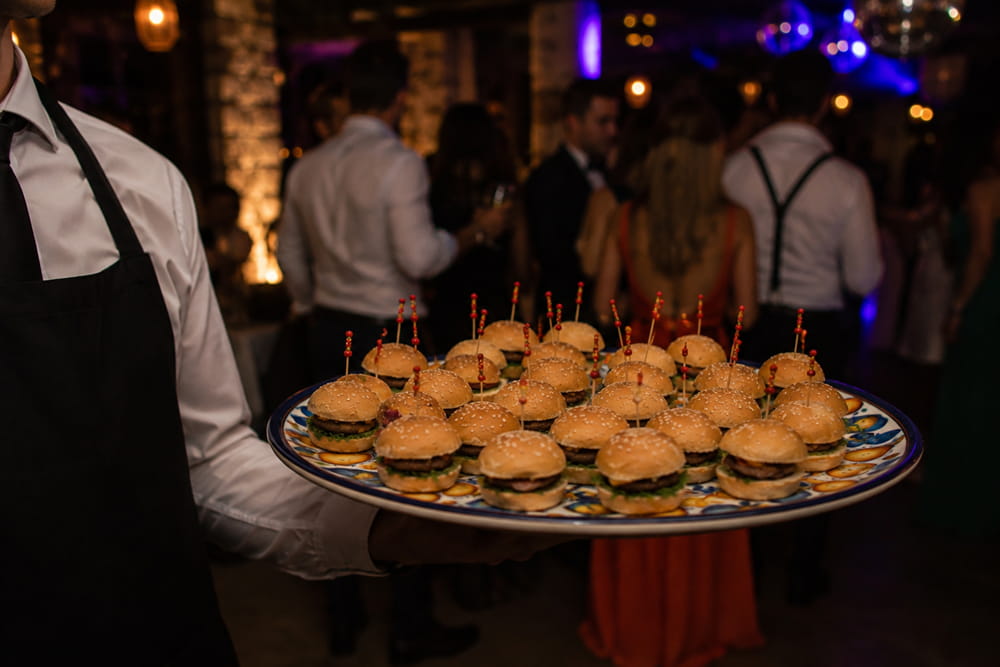
Just when everyone thinks the food is over, another course appears. Known as the recena, it’s a late night snack that’s usually served one or two hours before the end of the party. Depending on the wedding, it might include mini burgers, croquetas, Spanish omelet, pizza, chocolate with churros or other comfort food. After several hours of dancing, it’s exactly what everyone needs before heading back to the dance floor for the rest of the night.
Personally, I think the recena is one of those traditions that’s absolutely worth keeping. Guests are always thrilled when the food reappears, and it gives everyone a second wind to enjoy the rest of the party.
Frequently Asked Questions
Do I have to have a seated banquet at my wedding in Spain?
Not at all. Cocktail style receptions are becoming increasingly popular, especially among international couples. However, some venues only offer a traditional seated banquet, so if you already know you’d prefer a cocktail style reception, make sure to check this before booking your venue.
Is a cortador de jamón worth it?
In my opinion, yes! If you’re looking to include one authentic Spanish touch, this is probably the one I’d recommend. International guests love watching the ham being carved, and it’s one of those details people still talk about long after the wedding.
What is la hora loca?
La hora loca usually takes place about an hour after the dancing begins. Guests are given fun props like LED foam sticks, glow necklaces or oversized sunglasses, while the music and energy are turned up a notch. Some couples also hire dancers or entertainers, although I don’t think that’s essential if you’re working with a tighter budget.
Do I need to include a bouquet toss?
Not at all. In fact, it’s becoming much less common at Spanish weddings. Many couples now choose to surprise an engaged couple with a small gift instead, while others skip both traditions altogether.
How long does the open bar last?
At most wedding venues in Spain, the open bar begins after dinner and continues until the end of the celebration. It’s usually included as part of the venue’s wedding package, so it’s worth factoring it into your overall budget from the start.
What time do Spanish weddings usually finish?
Much later than many international couples expect! Depending on the venue and the day of the week, it’s not unusual for the party to continue until five or six in the morning, especially during the summer.

Say I Do in Spain – Destination Wedding Planner
¡Hola! I’m Eva, the wedding planner behind Say I Do in Spain and the author of this article. Born in Madrid and living abroad for most of my adult life, I have spent over ten years planning events and travel, and today I help international and multicultural couples get married in Spain. I work in Spanish, English and French and handle every supplier myself, so language is never a barrier. You can read more about me or see how I work with couples.